
This article originally appeared on KNIME’s blog. The following is an extended and uncut version.
What do you do when AI is either canned into black box solutions, or confined to the notebook code of your organization’s data science team? Both are valuable, but neither offers the speed, transparency, and autonomy marketers need. They both fail to invite marketers into the AI space.
But there’s a third way. There’s a “third place” that puts marketers back into the center of the AI conversation. Just as the coffeehouses of the 17th & 18th centuries brought together thinkers, writers, and merchants to share ideas and spark new solutions, this third place is where marketers can collaborate, experiment, and gain control of their AI journey and own their AI future, rather than having it built for them.
That’s where KNIME comes in. With KNIME, marketers have the visual, low-code environment to build and adapt AI workflows themselves.
In this article, I will highlight the benefits and challenges of canned AI, dedicated data science teams, and why you, as a marketing leader, should consider KNIME and claim your seat in the third place.
Marketer-to-Marketer Transparency
“Sweet discourse, the banquet of the mind.” ~ John Dryden — London’s Coffeehouse Literary King
Marketers are already fluent in visual tools. Canvas-based customer journey and audience builders like Customer Data Platforms (CDPs) have trained teams to work on drag-and-drop canvases. KNIME follows the same visual paradigm, letting marketers build AI workflows by connecting prebuilt nodes that represent each step of the process — a data transformation, a model training step, or an evaluation metric. The visual workflow environment gives marketing teams intuitive access to all the latest AI technologies.
Unlike code notebooks, typically used by data scientists, where AI innovation is buried in hundreds of lines of code, KNIME’s workflows are open and transparent. This happens naturally in a self-documenting way. Each step is defined and annotated directly by the people who know the business best: marketers.
Marketers can see how everything works at a glance and modify workflows without waiting on another team. This transparency creates shared understanding, faster decision-making, and fewer delays.
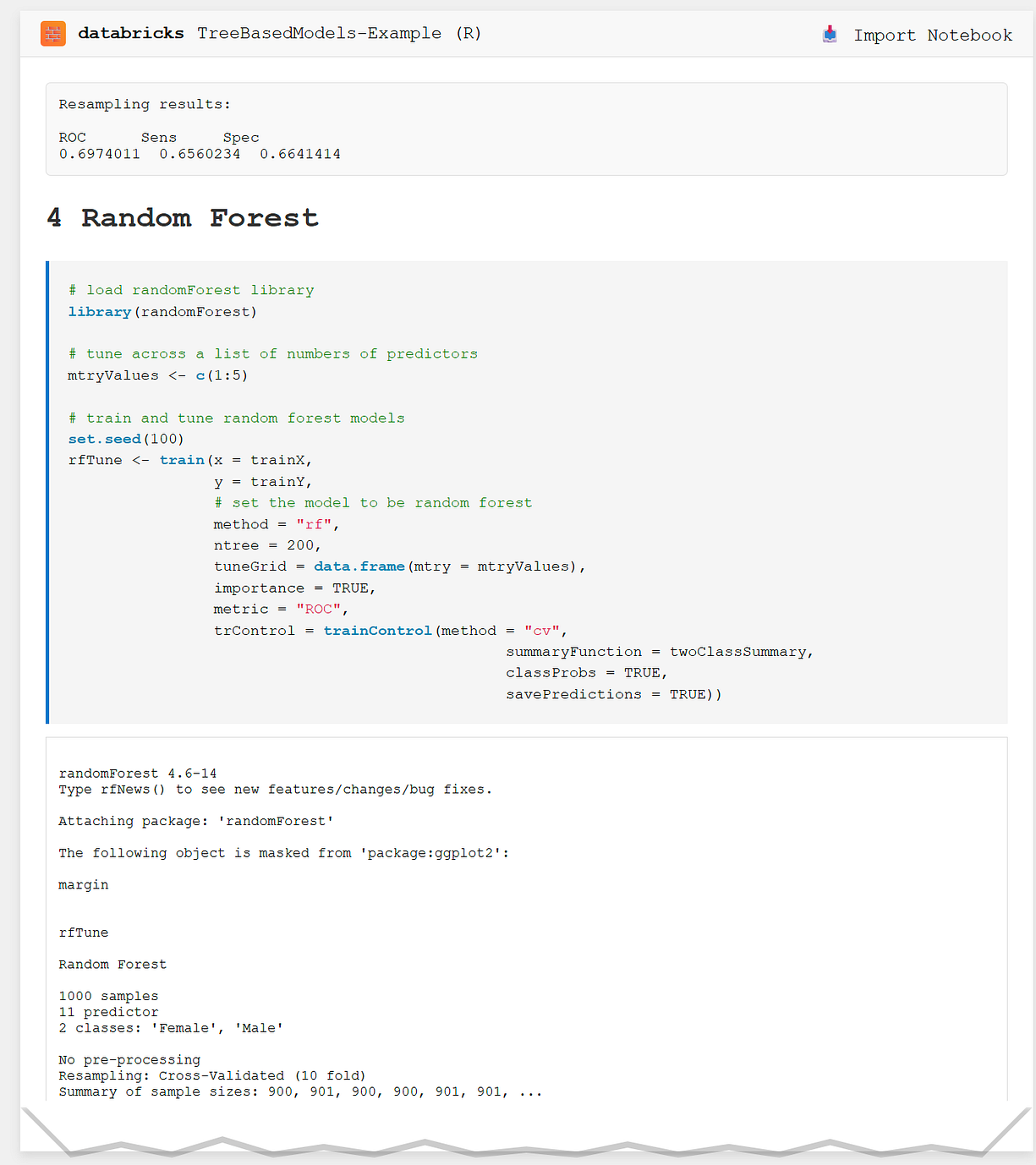
Notebooks are a familiar and natural place for data scientists to work within their centralized teams. They build custom models tailored to your marketing team’s needs, but that means waiting in line. These organizations are often building custom solutions for everyone, not just marketing. When you rely solely on a centralized data science team, you’re slowing your speed to market, while simultaneously reducing transparency.
As AI continues to capture budgets and executive attention, marketers risk losing autonomy over tools that directly impact their strategy and goals. KNIME’s visual approach keeps marketers in the driver’s seat — where you can see, modify, and explain your AI workflows on a canvas rather than buried in code, you preserve your strategic influence over AI investments.
For everyone to be on equal footing and reduce campaign time to market, a visual and low-code place is required.
The result: Marketer-to-Marketer transparency.
Marketer-Led AI
“Errors, like straws, upon the surface flow; He who would search for pearls must dive below.” ~ John Dryden
Off-the-shelf AI tools, like those found in Salesforce Marketing Cloud, Adobe Experience Cloud, and Braze offer quick value for common use cases like product recommendations, dynamic A/B testing, or contact optimization. No data science expertise is required. However, they weren’t designed with your challenges in mind. Configurability only goes so far, and they can fail or be quickly outgrown for industries where customer interaction data is sparse.
You may already be familiar with some of the common complaints:
- Triggering buyers’ remorse with a new recommendation that is conflicting to a similar recent purchase
- Click through rates have never been higher, but profitability goals are moving in the other direction
- Contact fatigue is well managed for email, but blind to other channels
- The model only looks at the last 28 days of interaction history, but our business is seasonal or customers only transact during major life stage events

KNIME helps close that gap by enabling marketers to either build their own solutions or collaborate easily with the data scientists through the intuitive visual environment.
The result: marketers don’t have to settle for generic models or wait in line. They can shape, deploy, and iterate on AI solutions as part of their everyday work.
Marketer & AI Collaboration
With AI assistance via “K-AI” marketers can be guided through building and modifying custom AI workflows in a human-to-AI collaborative way.
K-AI helps marketers build workflows by recommending and even placing nodes. Solving unfamiliar or challenging problems is aided by K-AI’s generation of expressions and scripts for nodes.
This collaboration dramatically reduces manual tasks. A recent study found that AI-assisted pipeline building means 81% fewer manual tasks (Zhou et al.).
The result: For marketing teams under pressure to deliver results quickly, this isn’t just convenient, but a competitive advantage.
Marketing & AI Community
“For what is a clear mind, but a fountain of knowledge and wit, that flows freely for all to drink?” ~ John Dryden
We’ve explored two ways of improving transparency and collaboration within your organization: marketer-to-marketer, and marketer to AI. Yet, collaboration does not need to stop there. KNIME’s Community Hub moves that collaboration and openness to like-minded marketers across the globe, in the same spirit of the pamphlets shared within Renaissance coffeehouses..
Visit the KNIME Community Hub to explore pre-built workflows, such as multi-method attribution modeling, which has seen a recent resurgence of interest. AI has led to a precipitous drop in organic search traffic by as much as 60% or more. Download this workflow to explore how forgotten and emerging channels can help fill the gap (e.g. connected TV, Out-of-Home and events).

You’ll find valuable starting points for common marketing analytics use cases such as customer segmentation, campaign optimization, and recommender models. In addition, you’ll find connectors and examples for working with systems that contain your marketing data, like Microsoft Fabric and Databricks.
Your Third Place Awaits
“We must cultivate our garden.” ~ Voltaire, a frequent guest of Parisian coffeehouses
To use and experiment with these workflow templates, you can start by downloading KNIME Analytics Platform, which is KNIME’s free and open source solution. This version includes K-AI, for you to experiment with before exploring KNIME’s commercial offerings that you may need to align with your organization’s enterprise deployment needs.
Your third place awaits. Will you claim your space in the AI revolution, or watch from the sidelines as others shape the future of marketing?
Works Cited
Jannach, Dietmar, et al. Recommender Systems: An Introduction. Cambridge University Press, 2012.
Zhou, Zhongyi, et al. “InstructPipe: Generating Visual Blocks Pipelines with Human Instructions and LLMs.” arXiv, 15 Dec. 2023, https://arxiv.org/abs/2312.09672.
Kahneman, Daniel. Thinking, Fast and Slow. Farrar, Straus and Giroux, 2011.