
You’re one week away from a total marketing operations standstill and it’s all because of your reliance on one person.
Your tribe is at risk because of “your Julie”.
Monday @ 8:30 AM
It’s the daily stand-up meeting. The campaign launch has been pushed back another two weeks because Julie, the most senior marketing technologist, has been busy fighting fires elsewhere. She’s the only person on earth that understands the core journey, all the integrations, and the customizations.
Wednesday @ 2:30 AM
The nightly batch jobs have been humming along.
Somewhere, deep within the code that Julie wrote two years ago, a silent error cascades across the pipeline.
An unauthorized promotion code is generated, and made public. Within minutes, thousands of customers have already redeemed it.
The overnight support team springs into action, but without Julie, they can’t apply a quick fix. They say they would need at least three days just to begin to reverse engineer the solution. “Let’s just wait for Julie to come in”.
Friday @ 1:00 PM
You’re just returning from your lunch with a vendor, when Julie walks into your office and places her resignation letter on your desk. She’s taking two weeks off in the Bahamas before her next role, and she’s departing next week.
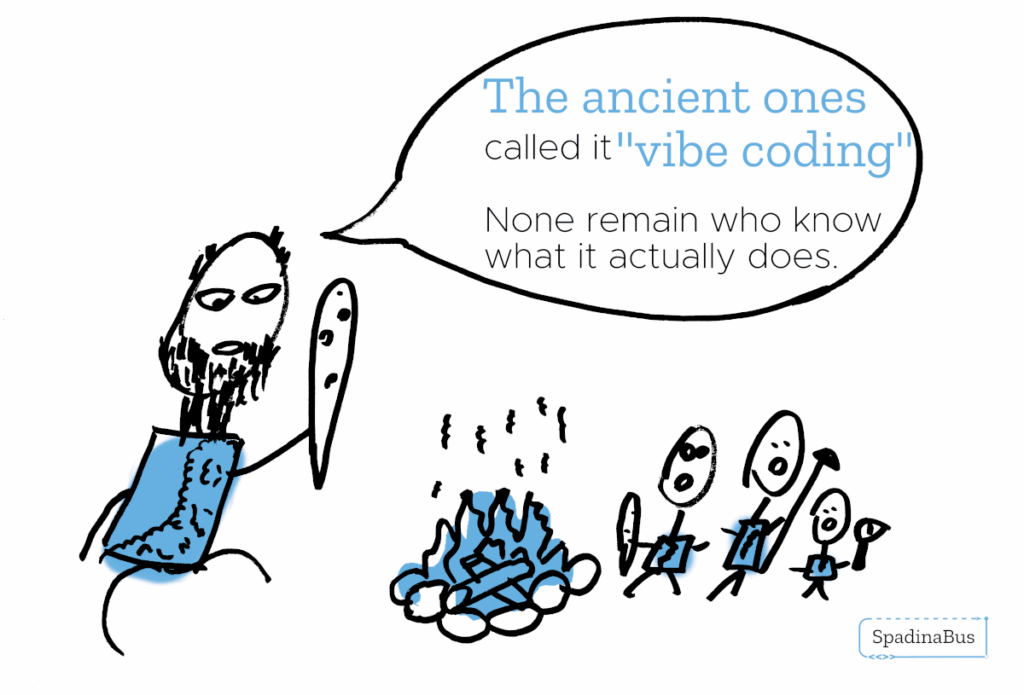
You’re left sitting in an office surrounded by whiteboards, like cave paintings on distant ancestral walls. Your team tries to piece together the tribal knowledge and gap left by Julie, huddled around the warm glow of her laptop screen.
—
Somewhere between the cave and the campaign calendar, we forgot the one thing that actually worked: write it down. Say it out loud. Make it nobody’s memory but everybody’s map.
You can too. But, be warned: AI makes the risks more urgent now. What Julie built over months or years, now can be tangled into an un-maintainable knot in weeks or days.
The fix isn’t exotic. Self-documenting systems. Visual workflows. The kind of maps a new hire could follow without ever meeting Julie
Behind the Sketch
Subprime Julie
A US-based subprime lender developed a custom near-real-time decisioning system, which was their single most strategic technology investment – mission critical. The core of the system was developed and maintained by one individual (their “Julie”) – a single point of failure. To reduce risk and increase agility, they implemented a single module from an enterprise marketing suite. The real-time decisioning module helped them to mitigate this risk, while simultaneously making the overall solution easier for team member collaboration through a new visual workflow.
The team improved their agility and reduced time to market by making use of self-documenting features in the workflows like annotations, as well as best practices like modularity (i.e. workflows-calling-workflows). In aggregate, these small elegant design choices add up to an approachable and easier to change solution – even for new hires.
Being your Own Julie
Even on small teams, or teams of one, it’s possible to “be your own Julie”. As a prolific creator of accelerators and prototypes, I often find myself returning to projects after months long hiatuses. Choosing visual solutions helps me to orientate myself on personal projects when I’m ready to resume, or I need to quickly fix something broken.
When I built an analytics pipeline and forensics tool for understanding LLM traffic, I opted to use a visual workflow solution, even though I could have simply started from existing open-source code-centric projects. A byproduct of this approach was that it was easier for me to share the inner workings of my solution with the solution’s wider community; in particular, to an audience that prefers nocode/lowcode.
Similarly, when I built a road closure & utility outage alert service for the city of Toronto, I opted for a different visual workflow solution that was ideal for working with open public API sources. When API keys need to be rotated, models change, or weird data shows up, jumping in to make corrections takes seconds – avoiding the mental strain of reviewing sometimes hundreds of lines of code to get back into the groove.
Although I used AI to help me code for both of these projects, I centered both projects around visual low-code solutions, which served as the common language between me and AI.