
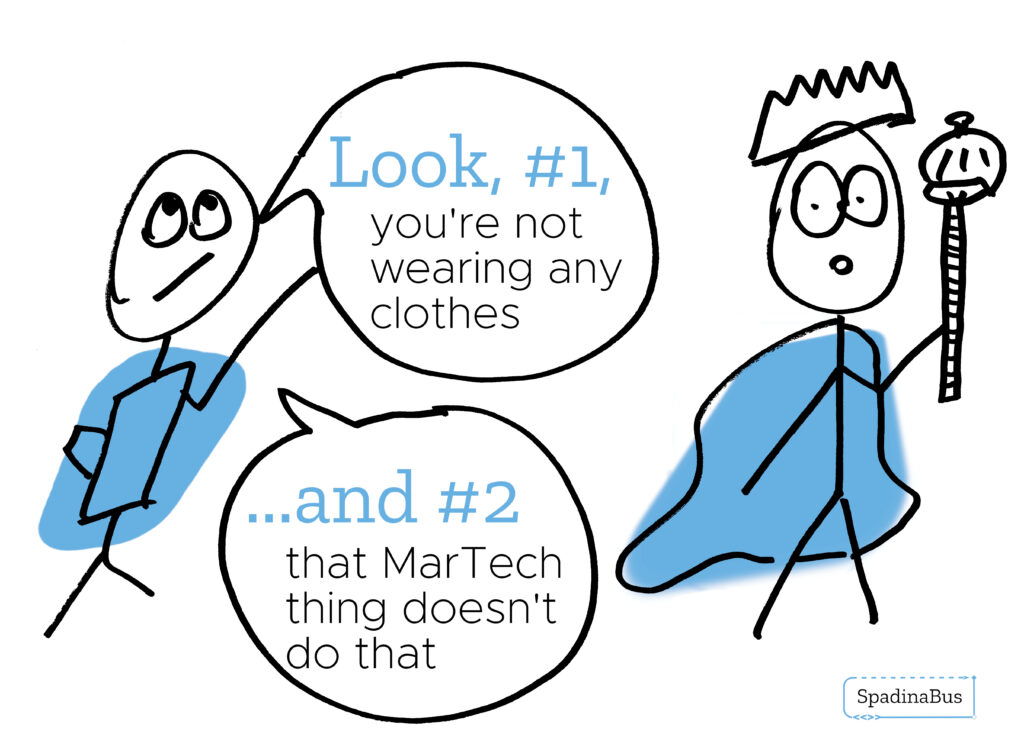
One of the most valuable things an advisor can say isn’t “yes.”
It’s:
“That product doesn’t actually do what you think it does.”
Years ago I found myself explaining exactly that to a very senior executive who had been getting polite, ambiguous answers from vendors and consultants.
It didn’t help that this decision maker had a familial connection to a mind-bogglingly wealthy and powerful business celebrity.
Nobody wanted to disappoint a high-profile client.
Nobody wanted to lose a sale.
Nobody wanted to be “that guy.”
So everyone kept saying things like…
“Well…it could potentially…”
“With enough customization…”
“Let’s investigate…”
Ten minutes of blunt honesty saved hundreds of hours of unnecessary meetings, investigations, and debate that never needed to happen.
That’s one of the advantages of being independent.
Sometimes the highest ROI isn’t building something.
It’s knowing when not to.
Behind the Sketch
This conversation happened during a project for a U.S. telecommunications company in the Deep South.
I still remember two things from that trip:
- Learning that the local Cuban expat community preferred their cortados very sweet.
- The rental car company repeatedly upgrading me to a Ford Mustang — which felt much more impressive when I still had hair and could pretend the wind was part of the experience.
What stuck with me most, though, wasn’t the coffee or the car. It was realizing how rare it is for someone in a high-stakes enterprise meeting to give a simple, unambiguous answer when everyone else has an incentive to avoid conflict. While we all prefer the truth, organizational and power structures make it difficult for it to surface without an independent voice. Looking back, nobody was trying to be dishonest; they were simply responding to the incentives of their role.